

In her latest work, Don’t Judge Job’s Wife, the author delves into the often-overlooked story of Job’s wife, offering a fresh and thought-provoking interpretation of her experience that resonates with the author’s own personal journey. Her compelling narrative invites readers to reconsider their judgments and embrace a more compassionate understanding of the characters from this ageless account.

It is the summer of 1951 in Kansas City, six years following the end of World War II. The worst flood of the century is about to happen, but eleven-year-old Sara Johnson and the rest of her neighbors along Southwest Boulevard have no idea of the impending disaster. Sara clings to the belief that haer father, missing in action since the battle of Iwo Jima, will return to her. She finds a kindred spirit in her friend, Nathalie Springer, a Jewish refugee from France, whose uncle owns the bookstore down the street. The two girls, with the help of a mysterious book and its author, Aaron Fishchel, explore the idea of soul transference, where people are reborn into the body of someone else. The reason for their interest is connected to the new pastor at Trinity Presbyterian Church. Reverend Emmett Bell looks amazingly like Sara's daddy, and he was there on Iwo Jima, but his severe wounds obscured some of his features and left him with amnesia. Is it possible the new minister is actually Sara's father, or Sara's father in the body of Emmett Bell? The coincidences add up and the idea tantalizes the girls, but their investigation leads to heartbreak and division in their families, among the neighbors and their new minister. The folks who live on Southwest Boulevard want to bury physical and emotional wounds suffered during the war. Sara's questions go too far. What is God's plan for the hereafter? It might be unexplainable to the folks who live on Southwest Boulevard in Rosedale, Kansas, but not to an eleven-year-old girl, who proves that love can cross all boundaries, including death.
Published: May 4, 2020
Genres:
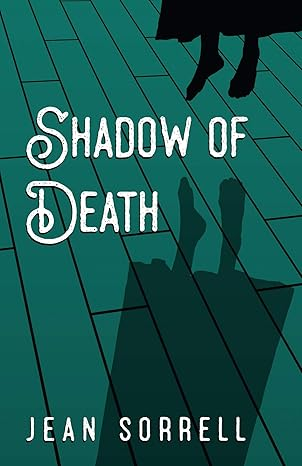
1940 Louisiana. The body of Sister Mary Gretchen is discovered hanging from the balcony in a deserted mansion next to the leper colony on the banks of the Mississippi River.
In New Orleans, her sister, Catherine Lyle, doesn’t want to retrieve the nun’s body. It’s not because she doesn’t love her older sister, but because she’s afraid to go outside her house. For almost twenty years Catherine has lived with a terrible secret, carried deep inside her subconscious, suppressed behind the safety of her portraits and her restoration of damaged works of art. But while the journey terrifies her, Catherine knows she has no other choice but to go.
As Catherine tries to put her fears aside, she finds compelling reasons to reject her sister’s death was suicide. From the hemp noose around her sister’s neck to the brutal murder of a leper patient, strange, unrelated clues are compiled: clues of Nazi infiltration of the colony and death threats to others. As Catherine gets closer to discovering the murderer, she finds herself marked for death. In the midst of the lush, exotic setting of a lonely leper colony on the banks of the Mississippi River, readers will find themselves transported to a time and a place that is no more.
Here is a volume of 16 stories, 3 poems, and a stage play from Authors in Louisiana. These are fresh voices with a variety and diversity of topics. The subjects in the anthology range from:
success stories (rags to riches; hard work pays off; appreciation of a teacher),
to a story about a farmer outsmarting a land grabber,
to early suffragists,
to a story about the Christmas chaos,
to spiritual poetry,
to a kidnapping story,
to romance, young love, and friendship,
to amnesia and renewal,
to the struggle of writing about abuse,
to a story about HMO issues,
to a stage play.
Not all are situated in Louisiana, but all are Louisiana authors.
When taken individually, each is a gem; when taken as a whole, the book represents insight and talent by our authors.
Genres:

Part of the Troll Series of Novels for Young Readers series:
- Winnie and the Mystery of the Missing Moonstones
- Winnie and the Trouble with Trolls
- Winnie and the Voodoo Trolls
Winnie, Jerry and Dad visit the campgrounds again, but all is not well.
Genres:
Reviews:Book Viral Review wrote:
Winnie and the Trouble with Trolls is a delightful mix of magic, humor, and heart. It’s a story about finding your courage, even when it’s inconvenient, and choosing what’s right over what’s easy. Perfect for readers aged 8–12, it’s an imaginative and empowering tale that encourages empathy, action, and believing in a little magic.
It is highly recommended.
A Memoir of 1960s Los Angeles, the Rise of Freeform Underground Radio, and the Legendary KPPC-FM

THE 1960s FROM A FRONT ROW SEAT! Riding on the Ether Express is a memoir of 1960s Los Angeles, the Rise of Freeform Underground Radio, and the Legendary KPPC-FM.
Published: September 1, 2008
Publisher: Center for Louisiana Studies (https://cls.louisiana.edu/)
Genres:
Reviews:Dr. Demento wrote:
If you grew up with rock music on FM radio, you gotta have this book.
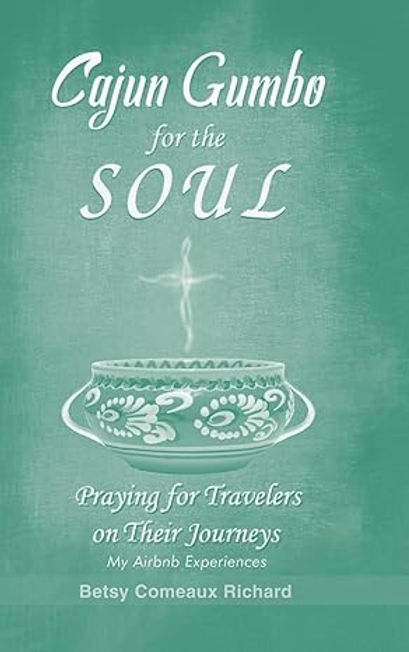
Travelers from all over the world pay a visit to Louisiana to immerse themselves in Cajun culture. Hospitality, food, and a love of life are intrinsic to our culture. Prayer from the Christian roots and morals of ancestors' past have not been forgotten deep in the heart of Cajun Country. Cajun Gumbo for the Soul is a beautiful book about one woman's Airbnb hosting experience in Lafayette, Louisiana, and the prayers she prayed for the travelers who stayed at her home. Praying for strangers of all kinds is an uplifting approach that allows for an abundance of gratitude and compassion to cultivate in our daily lives. Grab a cup of gumbo or head down to Cajun Country for some soul-nourishing Cajun joie de vivre. All proceeds from the sale of this book go to Catholic Charities of Acadiana (CCA) to support people experiencing homelessness in Acadiana on their journey to eternity.
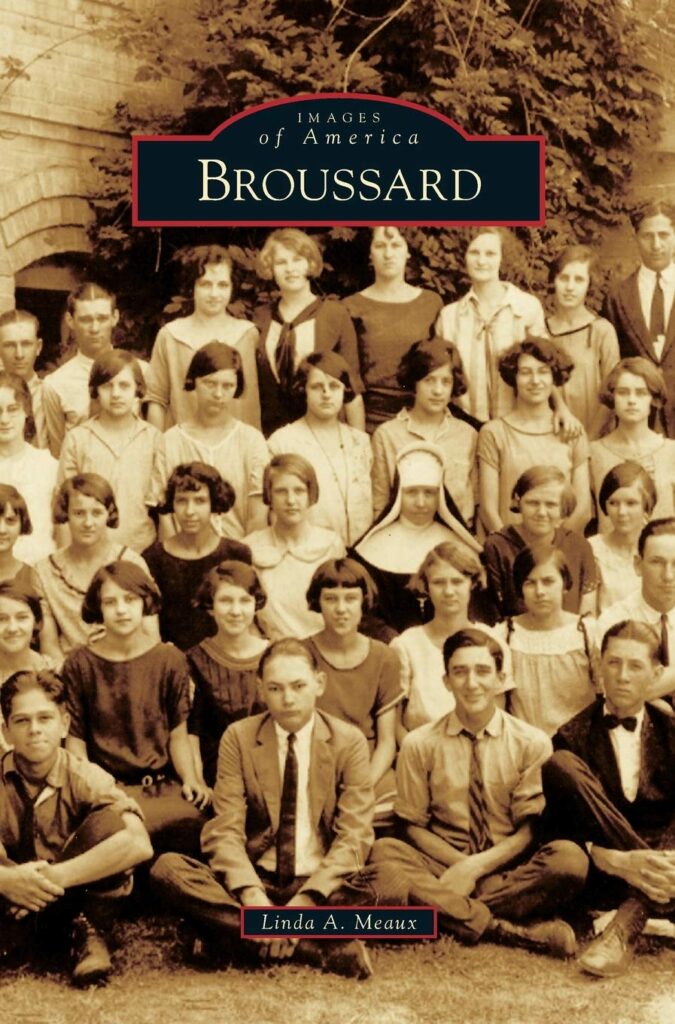
As early as 1765, Acadians began to settle near St. Martinville in the center of an area known as Cote Gelee, or "Frozen Hill," due to seasonal cold temperatures that covered the Mississippi River with ice. These early settlers were exiles from Acadie (now Nova Scotia, Canada). They established farms that, in the early 1800s, became interspersed among expanding sugar plantations. With a motto of "Where our rich culture defines us," Broussard is one of the fastest growing cities in Louisiana today. Embracing its past has made way for Broussard's competitive spirit that positions its leaders in not only the state, but also the world. The Billeaud Sugar Mill, which supported the community for many years, has now diversified into land acquisitions. The St. Julien families, identified for many generations with agricultural, professional, and political interests, have long-standing ties to the community, as do sports figures such as National League umpire Greg Bonin and two Blanchard siblings who competed in the Junior Olympics.
Published: January 18, 2016
Genres:
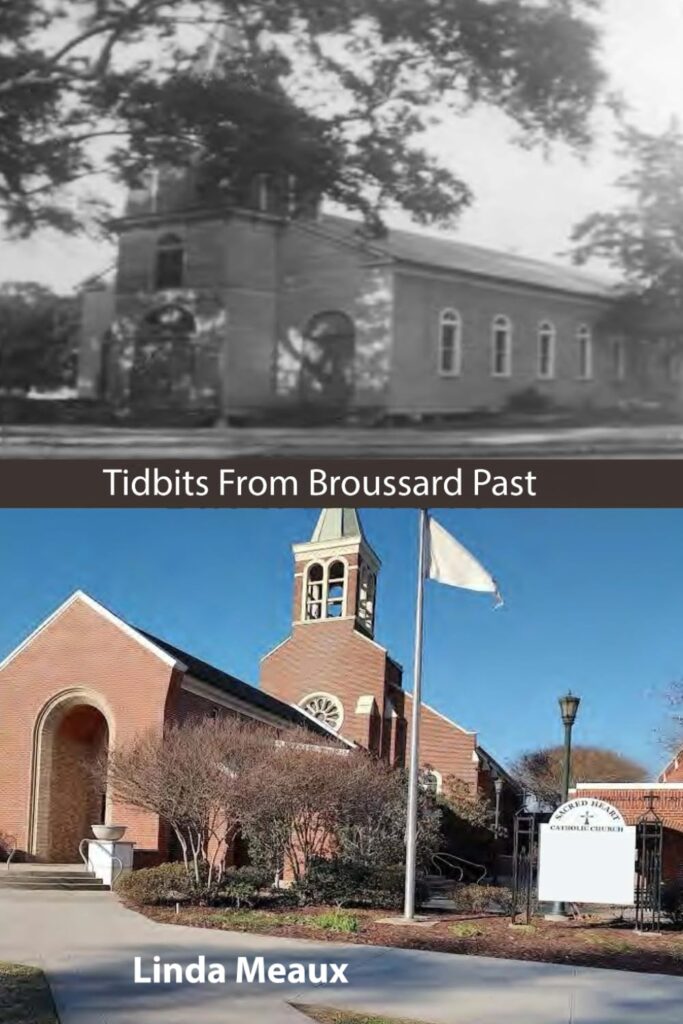
The French speaking Acadians earliest history was wrought by hardships, blood. and sacrifices. These gentle farming people were forced to flee from their homes in Nova Scotia. They were deported to foreign shores on both sides of the Atlantic for their refusal to bow down to British rule. Through the courageous efforts of Joseph "Beausoleil" the guerilla leader that stayed behind in Acadie, helping the Acadians to move to the Cote Gelee area in 1765.
Published: October 1, 2024
Genres: